Kinklist Maker: How to Build a Safer Yes, No, Maybe List
A kinklist maker can be useful because it turns a vague, sometimes awkward topic into a private worksheet: what sounds interesting, what is a maybe, what is off-limits, and what needs more conversation first. The best kink list is not a scoreboard or a promise. It is a living map for self-reflection, consent, boundaries, and partner communication. If you are still learning the language of kink, a private kink self-reflection tool can help you notice themes before you try to name every activity. Then a yes, no, maybe list can translate those themes into safer, more specific discussion.
What a Kinklist Maker Is Actually For
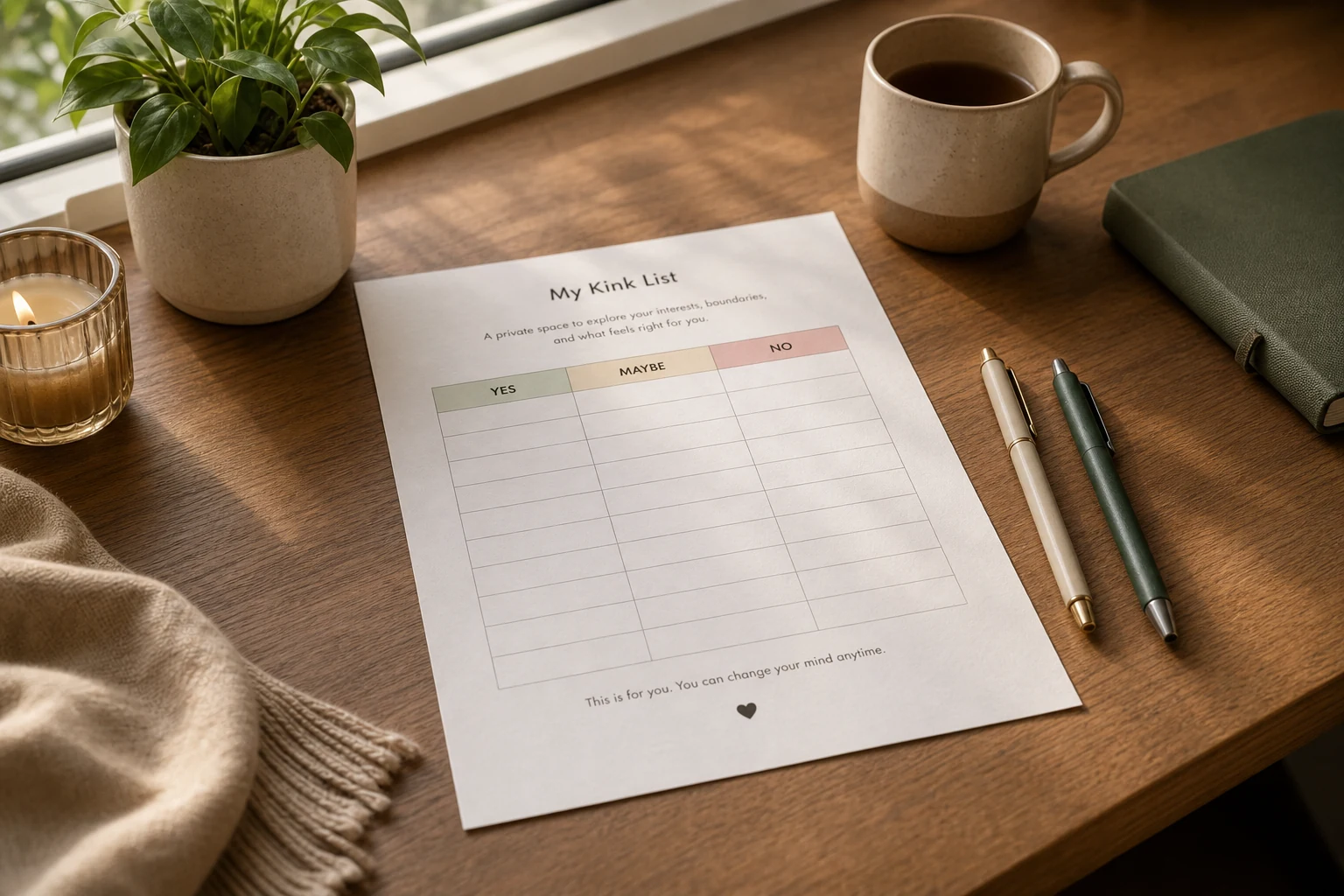
A kinklist maker is any tool, template, spreadsheet, app, or personal note system that helps someone organize kink interests into clearer categories. Many lists use labels such as yes, no, maybe, curious, hard limit, soft limit, tried, not tried, and need more information. Some are highly detailed, while others are intentionally simple.
The purpose is not to pressure anyone into action. A good list slows the conversation down. It lets one person say, "I am curious about the idea, but I do not know enough yet," while another person can say, "That one is a no for me." Both answers are useful. In fact, the "no" column may be the most protective part of the whole document.
This matters because kink language can be confusing at first. One person may use a term casually, while another person may understand it as a more intense practice. A list creates space to define terms, separate fantasy from real-world interest, and decide what would require research, planning, safer tools, or professional guidance before anyone considers it.
The strongest kink lists are also humble. Preferences can change. A maybe can become a no. A no can stay a no forever. A yes can still require context, limits, timing, trust, and aftercare. Treat the list as a conversation aid, not a final identity label.
The Anatomy of a Safer Yes, No, Maybe List
A useful kinklist maker should help you capture more than attraction. It should show the difference between curiosity, readiness, experience, and boundaries. Without those distinctions, a list can accidentally flatten complex feelings into a single checkbox.
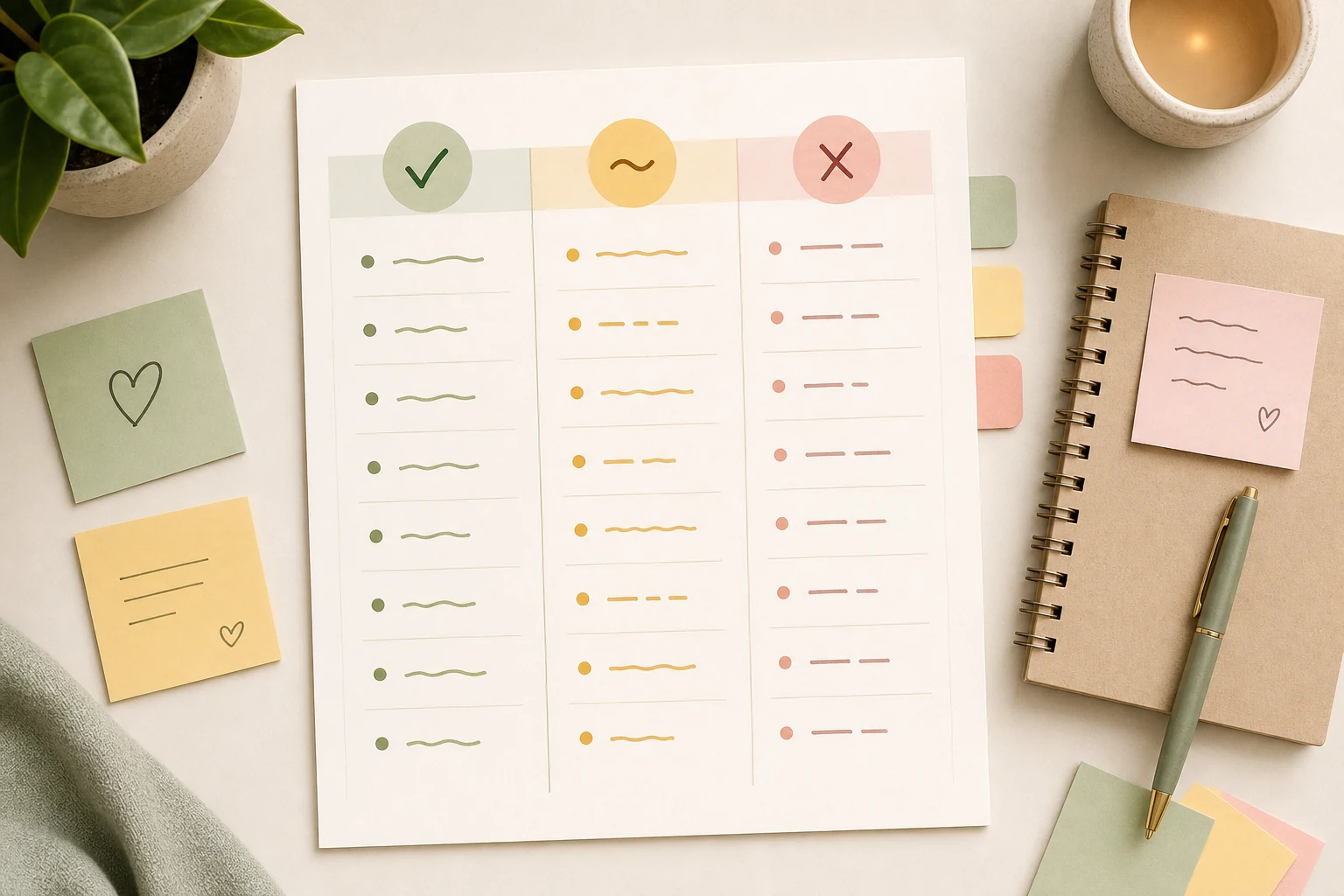
Start with a simple rating system:
- Yes: I am interested in discussing this further.
- Maybe: I need more information, context, or time.
- No: I do not want this included.
- Hard limit: This should not be negotiated or revisited casually.
- Need research: I do not understand this well enough yet.
- Fantasy only: I may enjoy the idea, but not real-world practice.
Then add a short notes column. This is where the list becomes genuinely useful. "Yes" may mean "only with a trusted long-term partner." "Maybe" may mean "I like the emotional dynamic but not the physical version." "No" may mean "not now," "not with anyone," or "not without a professional setting," depending on the topic.
It also helps to include experience level. Someone may be very interested in bondage as a concept but have no experience with knots, circulation safety, or quick-release tools. Another person may have tried roleplay before but only in light, playful settings. Interest and experience are not the same thing, and a safer list makes that visible.
Categories to Include Without Overwhelming Yourself
A common mistake is trying to build a complete encyclopedia in one sitting. That can be exhausting, especially when the list includes terms you have never heard before. A better approach is to group topics into broad, skimmable categories and add detail only where it helps.
For beginners, useful categories may include:
- Communication and negotiation, such as dirty talk, praise, teasing, or role labels.
- Sensory play, such as blindfolds, temperature contrast, texture, or sound.
- Power exchange themes, such as leading, following, service, or structured rules.
- Bondage and restraint, limited to ideas you can research carefully.
- Impact play, with clear notes about intensity and safer areas.
- Roleplay and fantasy, including what stays fictional.
- Exhibition, voyeurism, or privacy-related interests, with extra attention to legality and consent.
- Aftercare needs, such as quiet time, reassurance, water, food, or check-ins.
- Health, accessibility, and practical limits.
You do not need to include graphic details to make the list useful. In many cases, a plain phrase such as "light restraint, needs research" is better than a dramatic description. The goal is clarity, not performance.
If you are using an online kinklist maker, look for one that lets you customize categories, add notes, and revise your list over time. If you prefer privacy, a local spreadsheet or offline document may feel better. The format matters less than the habits around it: honest entries, no pressure, and regular updates.
How to Use a Kinklist Maker With a Partner
Partner use works best when each person fills out a private version first. This prevents one partner from unconsciously shaping the other person's answers in real time. After that, compare only what both people are comfortable sharing.
Set a low-pressure frame before opening the list. You might say, "This is not a request list. It is a way to understand each other better." That single sentence can lower defensiveness. It also makes space for one partner to admit uncertainty without feeling like they are disappointing the other person.
When you compare lists, look for three things:
- Shared yes items that still need boundaries.
- Shared maybe items that need education or examples.
- Any no or hard limit items that should be respected without debate.
The body H2 of this article is the natural place to remember the Kink Test site angle: a non-judgmental kink exploration starting point can help partners find language before they build a shared list. For some couples, the test result is easier to discuss than a long list of activities. For others, the list is easier because it is concrete. Both can work when consent stays central.
Avoid using a kink list during an argument, while intoxicated, or when either person feels cornered. A list should widen trust, not create a negotiation trap. If a topic feels emotionally loaded, pause and return later. If trauma, pain, anxiety, or relationship conflict is involved, consider talking with a qualified professional who is comfortable discussing sexuality and consent.

Privacy, Consent, and Safety Checks Before You Share
Because kink lists can contain sensitive information, privacy should be part of the setup. Decide where the list will live, who can see it, and how it can be deleted or updated. If you use a cloud document, check sharing settings carefully. If you use an app, understand whether saving, login, export, or sharing features are involved.
Consent also needs to be specific. A shared yes does not mean "any time, any intensity, any version." It means there is enough interest to talk. Before any real-world exploration, discuss what the activity means, what is included, what is excluded, what signals stop or slow things down, and what aftercare is needed afterward.
Use a separate risk check for anything involving pain, restraint, breath, marks, intense emotion, public settings, power exchange, or legal concerns. Some activities require skills, safer tools, sober planning, or a decision not to proceed. A kinklist maker can point to a conversation, but it cannot make an activity safe by itself.
A practical pre-share checklist:
- Remove items you are not ready to discuss.
- Mark hard limits clearly.
- Add notes for context, intensity, and conditions.
- Separate fantasy-only interests from real-world interests.
- Decide whether your partner may save, screenshot, or forward the list.
- Schedule a calm review time instead of dropping the list into a high-pressure moment.
This is also why the list should be revisited. People change through experience, learning, relationships, and life circumstances. A list from six months ago may not reflect today's boundaries.
Turning a List Into a Gentle Next Conversation
After you make the list, resist the urge to rush toward the most intense shared item. Begin with the safest conversation, not the biggest fantasy. Ask what each answer means. Ask what would make the topic feel safer. Ask whether the interest is emotional, sensory, relational, aesthetic, or simply curious.
You can use prompts like:
- "What does this word mean to you?"
- "Is this a real-life interest, fantasy only, or just curiosity?"
- "What would make this a no?"
- "What would aftercare look like?"
- "What do you want me to know before we discuss it further?"
If you are solo, the same questions still help. A kinklist maker can show patterns in what you are drawn to: structure, surrender, control, sensation, praise, novelty, restraint, service, or taboo fantasy. Patterns are usually more useful than isolated labels.
For a gentle next step, review your list beside a private kink test for self-discovery and notice where the two tools agree or differ. The point is not to prove anything. It is to build a clearer vocabulary for reflection and, if you choose, future partner conversations.
FAQ
What is the best way to make a kink list?
The best way is to keep it simple at first. Use broad categories, yes/no/maybe labels, a notes column, and a hard-limit marker. Add experience level and aftercare needs if the list is for partner discussion. A giant list may look complete, but a clear list you can actually discuss is usually more helpful.
Is a kinklist maker the same as a kink test?
No. A kink test usually asks questions and gives reflective results or themes. A kinklist maker is more like a worksheet for sorting specific interests, limits, and conversation topics. The two can support each other: a test may help you notice patterns, while a list helps you discuss details.
How do I find my partner's kinks without making it awkward?
Ask with permission and keep the first conversation low-pressure. You can each fill out a private yes/no/maybe list, then compare only the parts you both want to discuss. Make it clear that "no" is a complete answer and that curiosity does not create obligation.
What are some examples of kinks for girls?
It is better not to assume kinks by gender. Anyone of any gender may be curious about sensation, praise, roleplay, power exchange, restraint, service, exhibition themes, or many other interests. A safer approach is to ask what the person likes, dislikes, wants to learn about, and does not want included.
What is the kink test for couples?
A kink test for couples is usually a shared reflection tool that helps partners compare interests, boundaries, and communication styles. It should be used as a conversation aid, not as proof of compatibility. Couples still need consent, context, safe words, and aftercare planning before exploring anything in real life.
What if I searched for kinkrit?
Some people use unusual spellings, app names, or partial terms when looking for kink checklists. If you meant a kink list or kinklist maker, focus on tools that support privacy, custom notes, clear boundaries, and easy updates. The exact label matters less than whether the format helps you communicate safely.
What is the best social media for kink?
There is no single best platform for everyone. Look for communities with clear moderation, consent-focused rules, privacy controls, and adult-only spaces where required. Avoid sharing sensitive lists publicly, and be cautious with direct messages, screenshots, and identity details.