What Are Kinks? Examples, Meanings, and Safe Ways to Understand Them
Kinks are personal interests, fantasies, roles, sensations, or relationship dynamics that feel outside someone's idea of ordinary sex. That definition is broad on purpose. What feels kinky to one person may feel completely familiar to another, and what sounds exciting in fantasy may not be something someone wants in real life. If you are searching for what are kinks examples, the most useful answer is not a giant checklist. It is a way to understand examples without treating them as labels you must accept.
For curious adults, kink can be a private self-reflection topic, a partner conversation, or a way to name interests that used to feel confusing. A tool such as a private kink self-reflection questionnaire can support that process, but it should be used as a starting point, not as a final identity stamp. Consent, boundaries, communication, and aftercare matter more than any category name.

What Does "Kink" Mean?
In a sexual context, a kink usually means an interest that sits outside a person's usual or culturally expected script for sex, intimacy, arousal, or fantasy. That can include a role, a sensation, a power dynamic, a costume, a scenario, a body-part focus, a rule, or a style of communication.
The word is flexible because "normal" is flexible. Culture, age, media, community, relationship history, and personal experience all shape what people consider vanilla, adventurous, private, taboo, playful, or intense. A kink is not automatically unhealthy, and it is not automatically something to try. It is an interest that deserves context.
The safest definition is simple: a kink is an unconventional preference or fantasy that may be explored only when everyone involved can freely, clearly, and enthusiastically consent. If consent is missing, it is not kink. If someone is pressured, surprised, filmed, exposed, touched, watched, or involved without agreement, that crosses a serious boundary.
What Are Kinks in Hair or Text?
Search results can be confusing because kink has other meanings. In hair, kinks usually mean bends, coils, tight curls, or uneven texture. In a text message, someone might use kink to mean a quirk, twist, complication, or unusual preference depending on the sentence.
This article focuses on sexual and relationship-related kink examples for adults. If you meant hair texture or a casual phrase in text, the meaning is different.

Kink vs. Fetish: A Simple Distinction
People often use kink and fetish as if they mean the same thing. In casual conversation, that overlap is common. For self-understanding, a distinction can help.
A kink is usually an interest that can add excitement, intimacy, novelty, or emotional charge. Someone might enjoy role play, praise, restraint, or a specific power dynamic, but still enjoy sex or intimacy without it.
A fetish is often described as a more necessary focus for arousal, commonly involving an object, material, body part, or specific scenario. For example, someone might have a foot-related kink because feet feel exciting in some situations. Another person might experience a foot fetish if that focus feels central or necessary to their arousal.
Neither word should be used to shame someone. The practical question is not "Which label sounds more dramatic?" The better question is: What do I like, what are my limits, what feels optional, what feels important, and how would this affect another person?
Common Kink Examples by Theme
Kink examples are easier to understand when grouped by theme instead of treated as a ranking from mild to extreme. Many people have interests that cross categories.
Role Play and Scenario Kinks
Role play involves pretending, setting a scene, or stepping into a temporary character. Common examples include authority-themed scenarios, service roles, playful strangers, teacher and student fantasies involving adults, or fantasy characters. The appeal may come from novelty, confidence, humor, escape, or permission to express a different side of yourself.
Role play should stay clearly separate from real-world manipulation. A scene can involve pretend rules, but real consent must stay active. Partners should agree on what is in character, what is off limits, and how to pause without confusion.
Sensation, Restraint, and Impact Interests
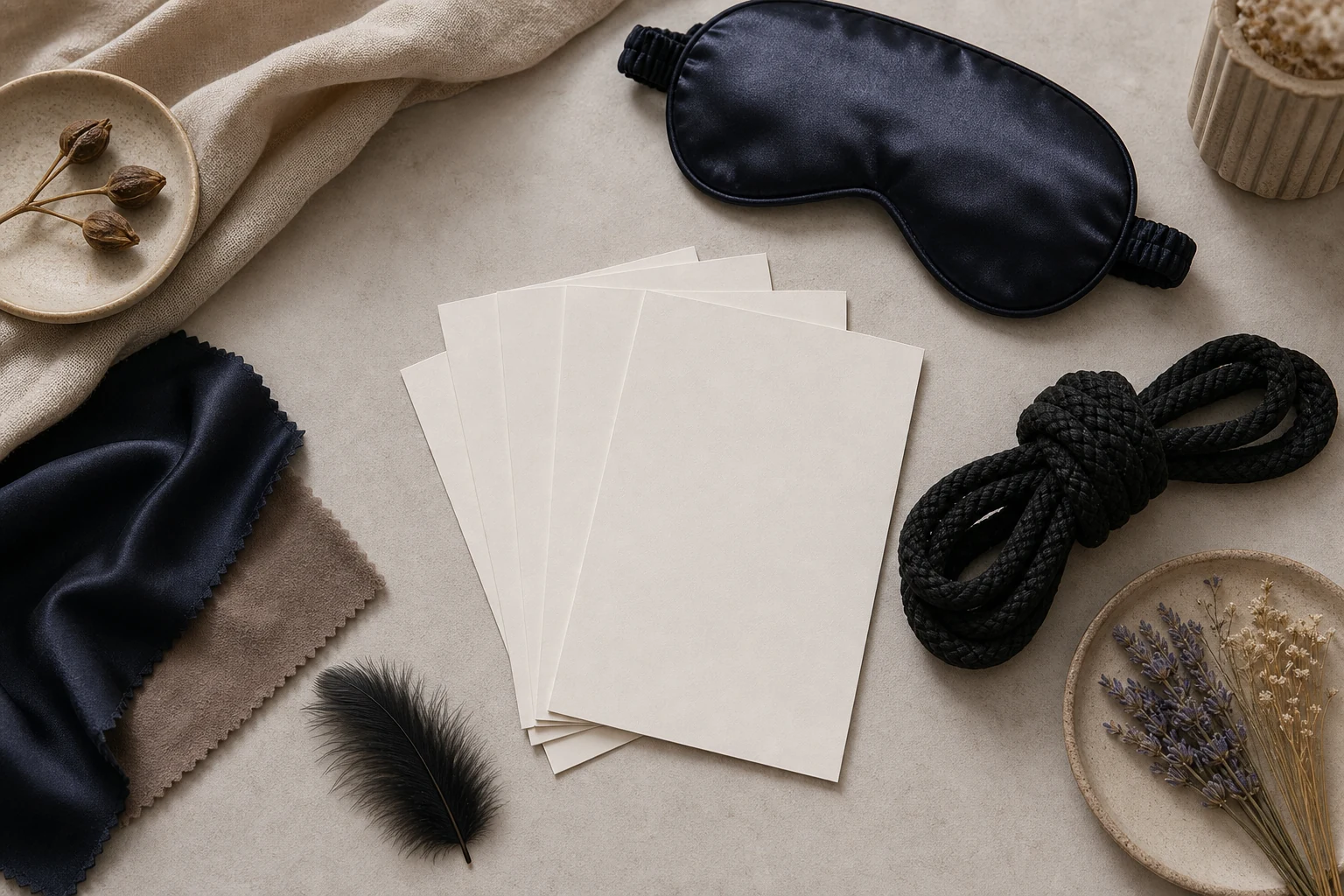
Some kinks center on physical sensation. Examples include blindfolds, feathers, temperature play, massage, tickling, light restraint, rope aesthetics, spanking, paddles, or other forms of impact play. The appeal might be anticipation, heightened focus, trust, texture, surprise, or a controlled contrast between comfort and intensity.
These examples require different levels of preparation. A blindfold conversation is not the same as rope restraint, breath-related play, or any practice that could affect circulation, movement, pain, or safety. Higher-risk activities call for education from reliable sources and, in many cases, should be avoided by beginners.
Power Exchange, Praise, and Control
Power exchange is a broad theme where people explore giving, receiving, sharing, or negotiating control. Examples can include dominance and submission, rules, service, praise, teasing, discipline role play, or protocol. Some people enjoy the emotional structure. Others enjoy feeling trusted, guided, admired, useful, focused, or released from everyday decision-making.
The important word is negotiated. A power dynamic is not a license to ignore autonomy. The person in a submissive role still has agency, limits, and the right to stop. A dominant role should involve responsibility, attention, and care, not entitlement.
Watching, Being Seen, and Public-Fantasy Labels
Some fantasies involve being watched, watching, risk, secrecy, or public settings. Examples can include exhibitionism, voyeurism, consensual performance, or role play that borrows the language of being available or "used." These themes can be intense because they play with exposure, taboo, status, or control.
This is also where consent must be especially clear. Real public settings include bystanders who did not agree to participate. A fantasy about public attention does not make it acceptable to involve strangers, record people, expose anyone, or create legal risk. If the idea is explored at all, it must be contained in a private, adult, consensual context where everyone affected has agreed.
Object, Material, and Body-Part Interests
Some examples involve a focus on objects, materials, clothing, textures, or body parts. Commonly discussed examples include feet, shoes, latex, leather, lingerie, gloves, scent, hands, hair, or specific fabrics. The interest may be sensory, symbolic, aesthetic, emotional, or tied to memory and association.
These interests are not automatically better or worse than role play or power exchange. The same questions apply: Is it consensual? Is it respectful? Is it safe? Is anyone being pressured? Does it fit the relationship or private context where it appears?
How to Read an Example Without Turning It Into a Label
Lists of kinks can make people feel as if they need to sort themselves quickly. That pressure is not helpful. A healthier approach is to treat each example as a prompt.
Ask four questions:
- What part of this example interests me: the feeling, the role, the language, the visual style, the trust, the taboo, or the control?
- Is this a fantasy, a curiosity, a maybe, or something I would genuinely want to discuss in real life?
- What would make it feel safer, kinder, slower, or more respectful?
- What would make it an immediate no?
An anonymous kink quiz can help organize those reflections, especially if you are not ready to talk with anyone yet. Still, any result should be read as a conversation aid. It cannot replace your own judgment, your partner's consent, or more specific education about safety.
Safety Questions to Ask Before Trying Anything
Before a kink moves from thought to real-life exploration, slow down. The goal is not to make everything formal or clinical. The goal is to make sure desire, limits, and care are all visible.
Use a yes, no, maybe list. Write down examples you are open to, examples you are not open to, and examples you might discuss later. Keep the list plain. You do not need to justify every boundary.
Agree on language. Some people like direct terms. Others prefer softer language. Some words can feel exciting in one moment and hurtful in another. Talk about words before using them in a scene.
Set stop and pause signals. A safe word can mean stop immediately. A second signal can mean slow down, check in, or change direction. If someone cannot speak clearly, agree on a gesture before anything starts.
Plan aftercare. Aftercare means the check-in and recovery period after intense emotional or physical play. It can be water, quiet, reassurance, space, a blanket, a short debrief, or a next-day message. It should match the people involved.
Avoid surprise escalation. Do not add new elements mid-scene because the moment feels exciting. Save new ideas for a later conversation.

What Kinks Are Popular, and Why Lists Can Mislead
Searchers often ask about popular kinks for Gen Z, women, men, couples, or beginners. The problem is that popularity lists can flatten individual experience. Online communities may make praise, dominance and submission, role play, restraint, feet, public-fantasy language, or rougher themes look especially common, but visibility is not the same as personal fit.
There are no typical women's kinks, typical men's kinks, or universal Gen Z kinks. Gender and age can influence language, media exposure, and comfort with discussion, but they do not determine desire. A woman may like dominance, submission, praise, restraint, service, no kink at all, or something entirely different. A Gen Z adult may be fluent in online kink vocabulary and still prefer very slow, private exploration.
Use popularity only as a clue about what people are discussing, not as a rule for what you should want.
A Gentle Way to Explore Your Own Kink Examples
The best first step is not to copy a list. It is to notice your pattern. Maybe you are drawn to trust. Maybe you like clear roles. Maybe you enjoy praise, restraint, costumes, sensory contrast, or the feeling of being fully seen. Maybe your interest is only fantasy, and that is enough.
Try writing three columns: "curious," "not for me," and "need to learn more." Put examples into the columns without judging yourself. Then add notes beside each curious item: private fantasy, solo reflection, partner conversation, requires safety education, or hard limit in real life.
If you want a structured but low-pressure starting point, low-pressure kink exploration tools can help turn vague curiosity into clearer language. Keep the process optional. You do not have to try everything you can name, and you do not have to name everything you feel.

FAQ
What is kink, and can you give some examples?
A kink is an unconventional sexual or intimacy-related interest, fantasy, role, sensation, or dynamic. Examples include role play, praise, restraint, sensory play, dominance and submission, feet, costumes, or consensual watching and being-seen themes. The category matters less than consent, safety, and clear boundaries.
What are the most popular kinks for Gen Z?
It is safer to say which topics are visibly discussed online rather than claim one fixed Gen Z list. Praise, role play, power exchange, restraint, feet, and public-fantasy language often appear in online conversations. That visibility does not mean every Gen Z adult likes them or should try them.
Are there typical women's kinks?
No single kink is typical for all women. Preferences vary by person, relationship, culture, experience, safety, and communication style. Some women enjoy power exchange, praise, restraint, role play, sensory play, or object-focused interests. Others prefer vanilla sex, solo fantasy, or no kink exploration at all.
Is a kink the same as a fetish?
Not exactly. A kink is usually an interest that can add excitement or novelty. A fetish is often more central to arousal and may involve a specific object, material, body part, or scenario. People use the words differently, so it helps to describe the actual interest instead of arguing over the label.
How do I know if a kink is safe to explore?
Start with consent, boundaries, risk level, and communication. If an activity involves restraint, pain, breath, public exposure, recording, bodily risk, or emotional intensity, do more research and move slowly. If anyone feels pressured, uncertain, intoxicated, unable to stop, or afraid to say no, it is not a safe moment to proceed.
Can a kink just stay a fantasy?
Yes. Many people have fantasies they do not want to act out. A fantasy can help someone understand themes, emotions, or curiosity without becoming a real-life plan. You can respect a fantasy, keep it private, discuss it carefully, or decide it is not something you want to explore.